
Anna Ballesté | Marianne Goffard | Alison Ladegaillerie | Valérie Newland
En griego antiguo, ἀνάμνησις (anámnēsis) designa el acto de traer de nuevo a la memoria aquello que parecía olvidado. En Platón, la anámnesis no es un simple recuerdo: es el reconocimiento de una verdad que nunca había desaparecido, pero cuya memoria había quedado velada.
Esta exposición explora la memoria como una materia viva. Aquí no se narra: sedimenta en la tierra, se teje en el hilo, cristaliza en la luz y se reúne en fragmentos. Cada obra parece surgir de un tiempo suspendido, como si albergara una historia antigua que espera ser reconocida.
Las cerámicas de Anna Ballesté nacen de una experimentación incesante con la materia. En una infinidad de matices de blanco, evocan vestigios rescatados de las profundidades marinas, fragmentos de ánforas olvidadas y objetos arqueológicos modelados por el fuego, el agua y los siglos. Parecen haber atravesado el tiempo más que pertenecer a él.
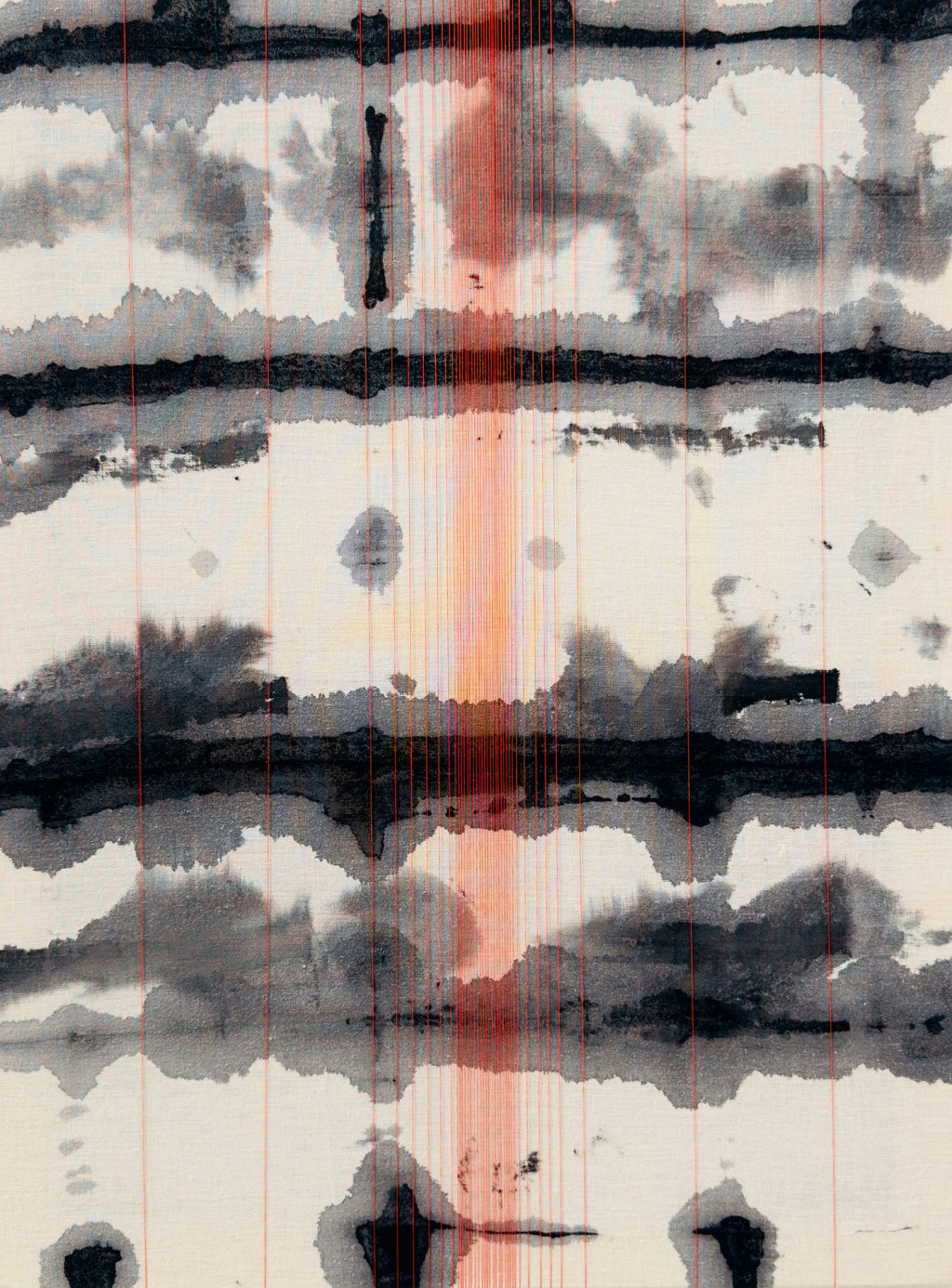
En la obra de Valérie Newland, la tinta china y el hilo se convierten en una escritura silenciosa. El textil es la materia de la memoria, un refugio para el alma. Cada puntada, cada tensión del hilo, une aquello que estaba disperso, como si el acto de tejer pudiera preservar las huellas más frágiles de la experiencia humana.
Las obras circulares de Marianne Goffard, realizadas con resina, pan de oro y tinta, abren un espacio donde la luz se convierte en memoria. El recuerdo nunca llega a manifestarse por completo: aflora, se vela y reaparece. Entre el resplandor y la transparencia, estas superficies exploran la frontera incierta entre la presencia y el olvido.
Las obras de Alison Ladegaillerie componen una constelación de fragmentos donde porcelana, madera flotante y formas orgánicas dialogan en un espíritu cercano al gabinete de curiosidades. La madera, pulida por el agua y el tiempo, conserva las huellas de su recorrido; la porcelana, a la vez delicada y extraordinariamente resistente, evoca vestigios reencontrados. Juntos, estos elementos dibujan una arqueología sensible en la que cada objeto se convierte en huella, recuerdo y posibilidad de renacimiento.
Anámnesis interroga los silencios de la historia del arte y el lugar de las mujeres artistas relegadas durante demasiado tiempo a sus márgenes. No se trata de reparar el pasado, sino de reconocer aquello que, a pesar del borrado, siempre ha perdurado.
Es una invitación a mirar de otro modo: a comprender que la memoria no es solo aquello que conservamos, sino también aquello que resurge cuando aprendemos a reconocer lo que siempre estuvo ahí.
In ancient Greek, ἀνάμνησις (anámnēsis) refers to the act of bringing back to memory what seemed to have been forgotten. For Plato, anamnesis is more than simple recollection; it is the recognition of a truth that had never disappeared, but whose memory had become veiled.
This exhibition explores memory as a living material. Here, memory is not narrated; it settles into clay, is woven through thread, crystallizes in light, and gathers in fragments. Each work seems to emerge from suspended time, as though it carried an ancient story waiting to be recognized.
Anna Ballesté’s ceramics arise from an ongoing exploration of material. In an infinite range of white tones, they evoke relics recovered from the depths of the sea, fragments of forgotten amphorae, and archaeological objects shaped by fire, water, and centuries. They seem to have traveled through time rather than belong to it.
In Valérie Newland’s work, Indian ink and thread become a silent form of writing. Textile becomes the material of memory, a refuge for the soul. Every stitch, every tension in the thread reconnects what has been scattered, as though the act of weaving could preserve the most fragile traces of human experience.
Marianne Goffard’s circular works, combining resin, gold leaf, and ink, open a space where light itself becomes memory. Remembrance never fully reveals itself; it surfaces, withdraws, and returns. Moving between radiance and transparency, these works explore the uncertain boundary between presence and oblivion.
Alison Ladegaillerie’s works form a constellation of fragments in which porcelain, driftwood, and organic forms enter into dialogue, recalling the spirit of a cabinet of curiosities. The wood, shaped by water and time, bears the marks of its journey; the porcelain, both delicate and remarkably resilient, evokes rediscovered relics. Together, these elements create a sensitive archaeology, where each object becomes a trace, a memory, and the possibility of renewal.
Anamnesis reflects on the silences of art history and the place of women artists who have long been relegated to its margins. It does not seek to repair the past, but to recognize what has endured despite erasure.
The exhibition invites us to look differently: to understand that memory is not only what we preserve, but also what resurfaces when we learn to recognize what has always been there.

